A FIRST COUSIN TO GENERAL ULYSSES S. GRANT
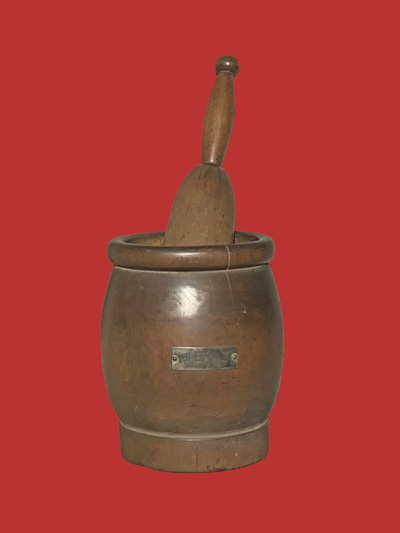
This mortar and pestle is larger than most, and made from wood (possibly lignum vitae?). With the pestle standing upright in the mortar, the total measures 15 inches in height. There is a silver plaque that has been affixed to the side, which reads:
Surg. D. C. Hough
7th N.J. Inf.”
I am including this in the “post-Civil War” category because I believe it was made post-war. Obtained over 45 years ago, I am certain that the plaque was put on many years after the Civil War; the style of the font is too “new” to be period. It is possible that it was gifted to local GAR in memory of Hough, or perhaps it was an item that belonged to him that a family member “memorialized” years later. In any case, Hough’s service record is notable, and it is worth reviewing his contribution to Civil War medicine.
DEWITT CLINTON HOUGH, M.D.
(1826 – 1897)
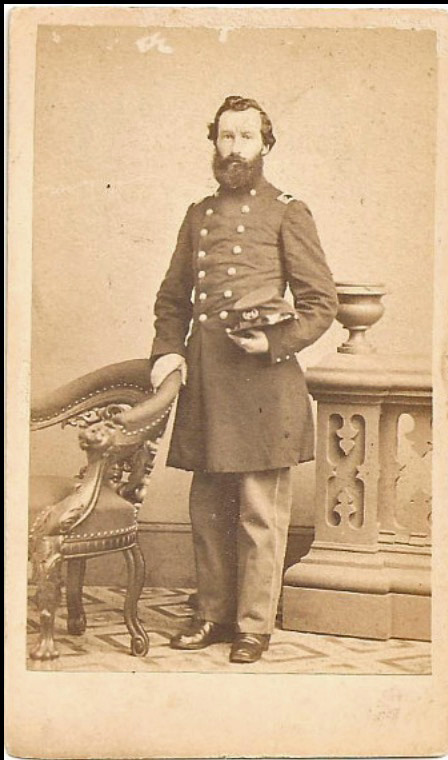
Hough was born in 1826 in Bucks County, Pennsylvania to Joseph Hough. His mother was a Simpson and sister to the mother of General Ulysses Simpson Grant, rendering the two soldiers first cousins.
He commenced the study of medicine under the tutelage of local physicians, and attended three courses of lectures at Jefferson Medical College, from which he was graduated in 1847. He practiced in Bucks county and then across the Delaware River in Frenchtown, in Hunterdon county, New Jersey before settling in Rahway, New Jersey, in 1857.
He was commissioned surgeon of the 7th New Jersey Infantry (Third Corps, then later consolidated with the Second Corps) in September 1861, and served with the regiment through all of the major battles that the Army of the Potomac was engaged: the siege of Yorktown, battle of Williamsburg, Seven Days’ battle before Richmond, Malvern Hill, Second Bull Run, Fredericksburg, Chancellorsville, Gettysburg, Bristow Station, Mine Run, the Wilderness, Spotsylvania, Siege of Petersburg, and the Appomattox Campaign. After the defeat at Chancellorsville, there was great difficulty evacuating the wounded and getting them back across the bridges. Hough volunteered to remain behind with the wounded and render aid. When he returned to his regiment, he reported that the Confederates helped give aid to the wounded Federals as best they could, but took all of his surgical instruments and equipment before sending him on his way. He was detailed to the Third Corps field hospital for six weeks following Gettysburg. He was promoted to brigade-surgeon shortly before mustering out of the regiment in 1864.
Returning to Rahway, he served as Mayor of that city from 1867 – 68, then served in the State Legislature from 1868-69. He died in 1897 of “paralysis”.