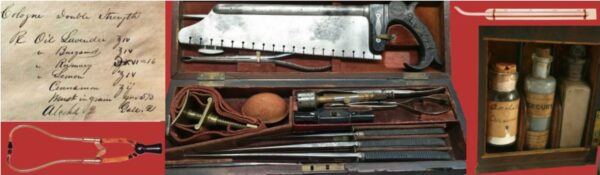
THE FIRST FEMALE CIVIL WAR U.S. ARMY SURGEON, ALSO A PRISONER OF WAR, WOMENS’ RIGHTS ADVOCATE, ABOLITIONIST, AND ONLY WOMAN EVER AWARDED THE CONGRESSIONAL MEDAL OF HONOR
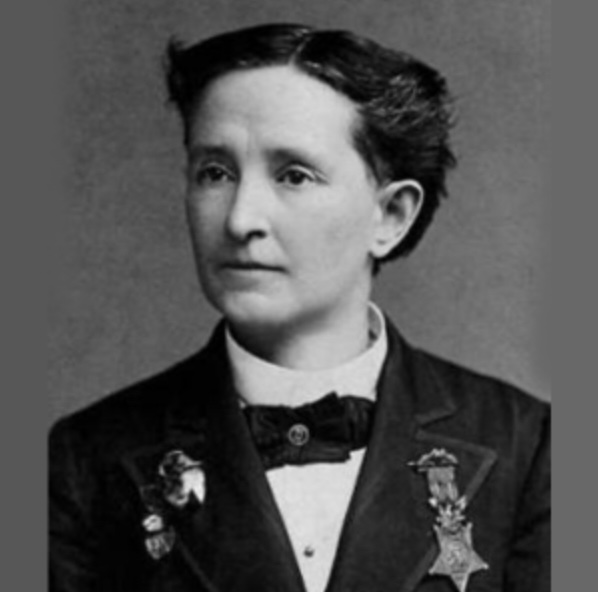
RARE LETTER DATED FROM WALKER TO COLLECTOR FREDERICK HILL MESERVE
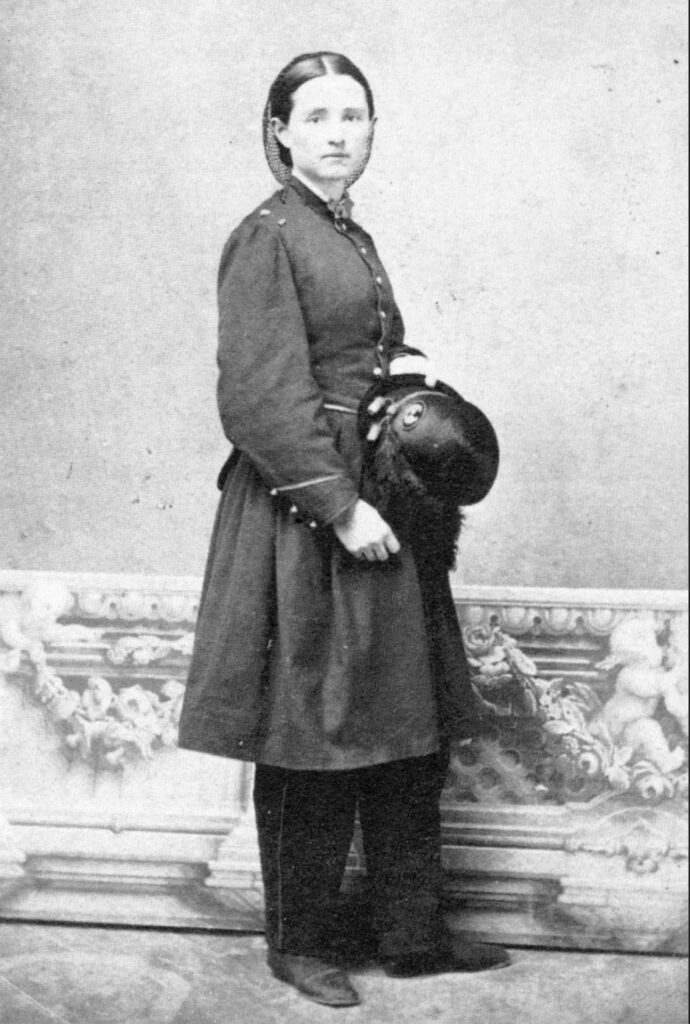
A CARTE-DE-VISITE PHOTOGRAPH SIGNED BY DR. MARY E. WALKER
How Dr. Mary is Remarkable
Dr. Mary Walker is a remarkable woman. During the [Civil] war she rendered great service to the Union army in the hospitals of the West. She asked no compensation for her work and received none. It was during this period that she adopted the bloomer costume, which was the first step toward her investiture in men’s garments… Secretary Stanton had a commission issued to her as major and surgeon of the army. Of course the appointment was purely honorary… She succeeds, however, in making a complete nuisance of herself. She demands the rights accorded to those who wear the male costume, but insists upon her privileges as a woman.
The Pittsburg Dispatch, Monday, 23 September 1889
https://drexel.edu/legacy-center/the-collections/exhibits/dr-mary-walker/the-remarkable-dr-mary/
The Remarkable Dr. Mary
Mary Edwards Walker was born in 1832 in Oswego, New York. In 1855 she received her M.D. from Syracuse Medical College. She was the only female surgeon to serve in the Civil War and was captured by Confederate soldiers in April of 1864. She was held prisoner in Richmond, Virginia, for 4 months and was finally released in August that same year. Dr. Mary was awarded a Congressional Medal of Honor for her services. Her Medal of Honor was revoked in June of 1916 along with others by an Act of Congress. The Medals were not awarded with the requirements listed in Section 122, which requires those who receive Medal of Honors for distinguished conduct to be involved in actual conflict with the enemy. Her Medal was re-instated posthumously in 1977.
The Remarkable Dr. Mary
Dr. Mary, as she liked to be called, was also a strong advocate for women’s dress reform. She began wearing bloomers during the Civil War and after the War began wearing “men’s clothing” – trousers and Prince Albert jackets, accompanied by short hair and sometimes a top hat. In the late 1860s, she toured the United Kingdom lecturing on the physiological reasons women ought to shun their traditional dress and begin wearing trousers. She caused quite a sensation. In 1874 Congress granted her a pension, and from 1882 to 1883 she served as a clerk in the Department of Pensions. In her old age, Dr. Mary moved back to the small town of Oswego, where she lived alone and was often seen wearing denim overalls and a shabby hat, driving her horse-drawn wagon through town. She died in 1919 after a rather lengthy illness.