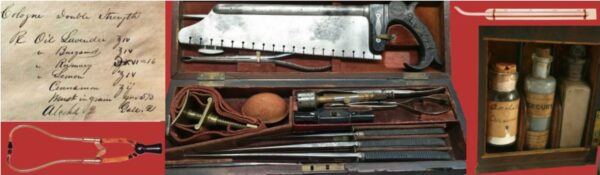
MID-19TH CENTURY
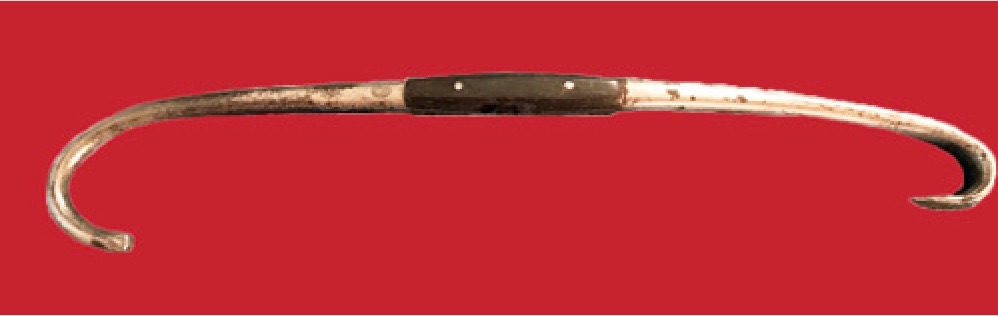
This tool was used by the accoucheur or accoucheuse (male or female
obstetrician, respectively – and sometimes midwife). It was used from
the 1600’s to the late 1800’s. This particular example is made of
unplated steel and has a rosewood handle. The blunt hook end was used in
difficult deliveries; it would be inserted around the neck or under
the shoulder to re-position and guide the fetus during childbirth. The
crochet end was used in the case of a stillborn or aborted fetus – after
the skull was broken with a perforator tool, the crochet was inserted
into the cranium (or eye socket, shoulder, etc.) to extract the baby.
It is marked “Wright” and is from the United Kingdom. According to Bennion, there were two possible makers: John/William/Henry Wright of London, active from 1794 – 1867, or William Wright of Edinburgh, active from 1782 – 1827.